
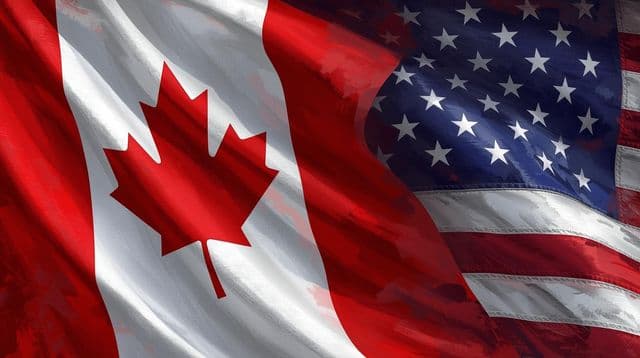

President Donald Trump warned Canada that he would impose sweeping 100% tariffs on all Canadian goods if Ottawa proceeds with a trade agreement with China.
The warning was delivered through a series of posts on Trump’s Truth Social account over the weekend.
Trump said he would not allow Canada to become a transit hub for Chinese goods entering the United States market.
He described Canada as a potential “drop-off port” for Chinese exports seeking access to US consumers.
The former president framed the issue as a matter of national economic security rather than routine trade policy.
Trump said the proposed tariffs would apply immediately if the Canada–China deal is finalised.
If Canada makes a deal with China, it will immediately be hit with a 100% Tariff against all Canadian goods and products coming into the U.S.A. Thank you for your attention to this matter.
Donald Trump said.
He argued that China’s growing trade influence poses a long-term risk to Canada’s domestic industries.
Trump claimed that Chinese competition would undermine Canadian businesses and weaken the country’s social and economic foundations.
China would eat Canada alive, destroying their businesses, social fabric, and general way of life.
Donald Trump added.
In a follow-up post, Trump dismissed any suggestion that China could gain lasting influence over Canada.
The last thing the World needs is to have China take over Canada. It’s NOT going to happen, or even come close to happening.
Donald Trump also noted.
The remarks marked a sharp reversal from Trump’s comments earlier this month on the same issue.
On January 16, Trump appeared to support Canada’s right to pursue trade agreements with China.
That’s OK. That’s what he should be doing. I mean, it’s a good thing for him to sign a trade deal. If you can get a deal with China, you should do that.
Donald Trump emphasized.
The policy shift has drawn attention because Canada is one of the United States’ largest trading partners.
Trump has repeatedly used tariff threats against Canada during periods of trade tension.
The latest dispute follows trade agreements reached between Canadian Prime Minister Mike Carney and Chinese officials.
The agreements reportedly include reduced tariffs on Chinese electric vehicles entering Canada.
Up to 49,000 Chinese-made EVs could be allowed into the Canadian market under the new framework.
Canada also secured improved tariff terms for its agricultural exports to China.
The Canadian government has defended the deals as necessary to protect domestic economic interests.
Carney responded to Trump’s comments by promoting a national “buy Canadian” policy.
He released a video encouraging consumers to support locally produced goods and services.
Carney said Canada aims to invest more heavily in domestic alternatives to foreign technology and imports.
He acknowledged that external economic pressures continue to challenge the Canadian economy.
We can’t control what other nations do. We can be our own best customer. And together, we will build Canada strong.
Mike Carney said.
The escalating rhetoric adds uncertainty to North American trade relations as election politics intensify.